BCs_Battle_of_the_Atlantic_History

PACIFIC BUILT, ATLANTIC BOUND

Separated from the U-boat threat by 5,000 kilometers of land, British Columbia’s shipyards mobilized to become the Allies' vital lifeline. While the Atlantic burned, the Pacific forged the steel to extinguish it. This timeline traces the odyssey of the West Coast war effort—from the rivets driven in North Vancouver and Esquimalt to the desperate convoy battles of the North Atlantic.

Pre-1939

Moribund Industry Mobilizes

Before 1939, Canada's shipbuilding industry had been moribund for nearly two decades [1-4]. The total labour force in 1939 was only about 3,796 employees [5]. The industry's revival began with the urgent demand for ships to support the Allied lifeline across the Atlantic [6].
Image Source: Unemployed Parade Through Vancouver, 1935

Unemployed Parade Through Vancouver, 1935
Relief camp men and their supporters parade up Hastings Street to cheer men occupying the top floor of the Public Library and City Museum (now Carnegie Centre), 1935.
3 September 1939

The Longest Battle Commences

The Battle of the Atlantic began on the opening day of the Second World War [1, 2]. The sinking of the British liner Athenia by a German submarine west of Ireland marked the commencement of the Battle [2].
Image Source: RCI Radio Canada International

Placeholder
The U-30 crew learning that they had just hit Athenia, an unarmed civilian ship full of women and children, were horrified that they had just committed a warcrime. Lemp swore his crew to secrecy and ordered them to never speak of the attack. He also altered the ship’s official log to erase any connection with the attack.
1940 – 1942

BC Mobilizes as "Unsinkable Arsenal"

The cargo ship program "unleashed a wave of private investment" in British Columbia [16]. BC provided a secure industrial base for uninterrupted production due to its mild climate and geographic isolation from the U-boat threat [17, 18].
Image Source: MONOVA Museum & Archives of North Vancouver

Placeholder
Before World War II, Canadian shipyards were run-down and technologically far behind yards in places such as England and Scotland. Few vessels of significant size had been built during the Depression years, and the skilled workers were mainly older men whose expertise went back to the previous world war. When Canada set out to help Britain, only six of British Columbia’s shipbuilding yards were deemed capable of constructing the 10,000-ton standardized merchant vessels. One was located in Victoria, one in Prince Rupert and four in the Vancouver area, which included Burrard Inlet. The two located on the inlet’s north shore, Burrard Dry Dock Company and North Van Ship Repairs, produced close to half of Canada’s total output of 354 vessels, as well as the vast majority of the 255 built in British Columbia. The mild West Coast climate helped achieve this feat.
Mid-1942

The Crisis of the "Black Pit"

U-boat attacks reached their peak effectiveness in the mid-Atlantic air gap, known as the "Black Pit," where Allied aircraft could not reach. [cite_start]Allied losses mounted to critical levels, threatening the entire war effort and making the rapid production of Canadian corvettes and cargo ships a matter of survival[cite: 7, 24].
Image Source: WIKIPEDIA The Free Encyclopedia

Placeholder
The Mid-Atlantic gap is a geographical term applied to an undefended area of the Atlantic Ocean during the Battle of the Atlantic in the Second World War. The region was beyond the reach of land-based RAF Coastal Command anti-submarine warfare (ASW) aircraft. This resulted in many merchant shipping losses to U-boats. The gap was eventually closed in May 1943, as growing numbers of Very Long Range Liberators (VLR) and escort carriers became available and as basing problems were solved. The Mid-Atlantic gap was an area outside the cover by land-based aircraft; those limits are shown with black arcs (map shows the gap in 1941). Blue dots show destroyed ships of the Allies
Oct 14, 1942

Terror in the St. Lawrence

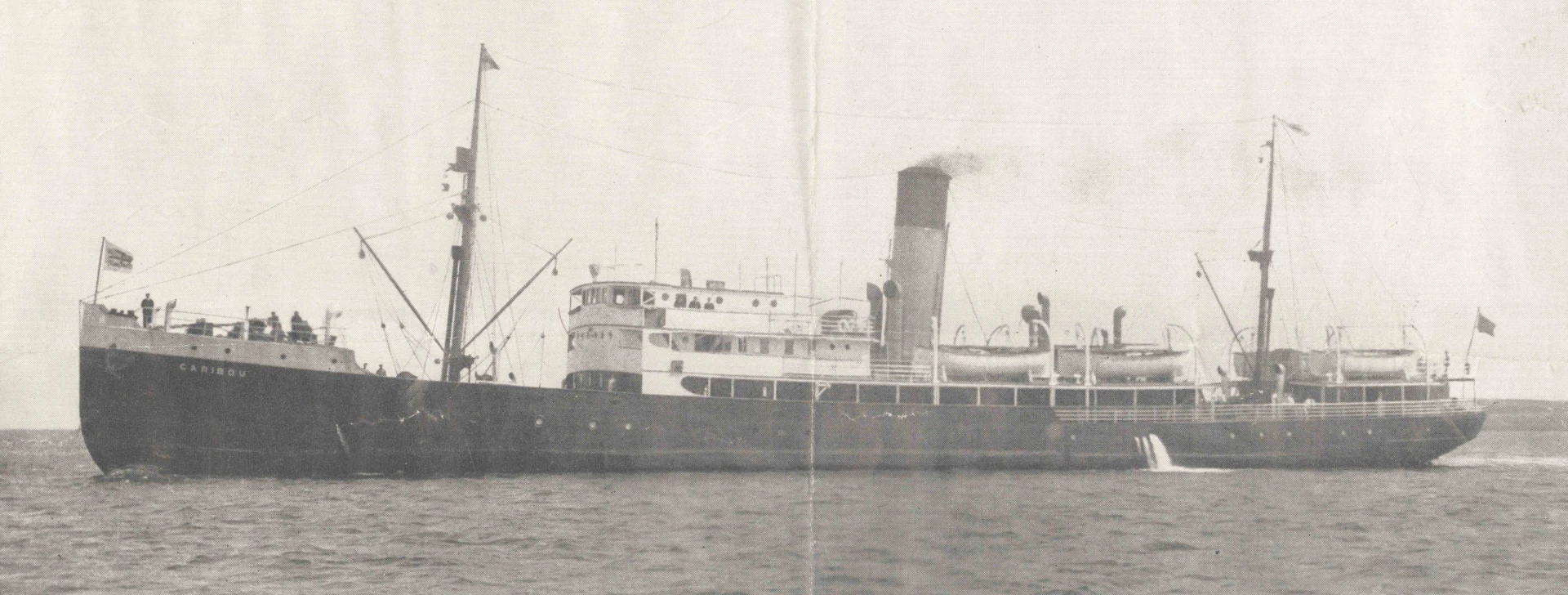
The war came to Canada's doorstep when the ferry SS Caribou was sunk by a U-boat in the St. Lawrence, resulting in the loss of 136 men, women, and children [16]. This tragedy galvanized the home front.
Image Source: TRIDENT The Newspaper of Maritime Forces Atlantic Since 1966
Placeholder
Displacing 2200 tons, 265 feet long and loaded with 450 tons of cargo, 191 passengers and a crew of 46, Caribou was owned by the government-run Newfoundland Railway. She was an institution to the people of Newfoundland and as Britain’s oldest colony, she reflected a common pride in Newfoundland’s contribution in this, now the third year of war.

Since the United States’ entry into the war following the Japanese attack on Pearl Harbour, German submarines have ventured daringly close to land to conduct attacks on Allied merchant shipping all along the eastern seaboard of the U.S., Canada and Newfoundland. In the five months leading up to October 1942, U-boats sunk 19 vessels either in or very close to the Gulf of the St. Lawrence River, often within sight of the residents of the coastal communities along the shores. Although closed to ocean shipping, the Gulf area remained open for vessel transits between the Maritime Provinces and Newfoundland including passenger ferries.

Due to overwhelming commitments for Trans-Atlantic escort duties, the Canadian Navy is forced to relegate its smaller warships for escort duties within Canadian waters. It is for this reason that a minesweeper is tasked with this escort duty. Unfortunately, the Canadian Navy is almost pathetically unprepared for war because of years of neglect since World War I. The Captain and crew of Grandmere prepare for their escort duties after returning to North Sydney just 2 days after conducting depth charge attacks on a suspected submarine in the Cabot Strait which has sunk the British merchantman Waterton.
May 1943

"Black May": The Turning of the Tide

[cite_start]

The decisive turning point of the Battle of the Atlantic occurred in "Black May." Allied long-range aircraft, improved radar (centimetric), and code-breaking (Ultra) allowed convoys to fight back effectively, sinking 41 U-boats in a single month and forcing the Germans to withdraw from the North Atlantic[cite: 13, 22].
Image Source: WIKIPEDIA The Free Encyclopedia

Placeholder
In May 1943, U-boat strength reached its peak, with 240 operational U-boats, of which 118 were at sea, yet the sinking of Allied ships continued to decline.[2] May 1943 also had the greatest monthly losses suffered by U-boats up to that time, with 41 being destroyed, 25 per cent of the operational U-boats.[3] The month opened with the battle for Convoy ONS 5, which was costly for both sides, with the loss of 13 merchant ships and six U-boats. The tactical improvements of the escorts began to take effect; the next three convoys that were attacked resulted in seven ships sunk and an equal number of U-boats. Five U-boats were sunk attacking Convoy SC 130, with Admiral Karl Dönitz's son, Peter, among those lost aboard U-954, while no convoy ships were lost.[4] Allied losses in May were 58 ships of 299,000 long tons (304,000 t), of which 34 ships of 134,000 long tons (136,000 t) were lost in the Atlantic.

During May there had been a drop in Allied losses, coupled with a tremendous rise in U-boat losses; 18 boats were lost in convoy battles in the Atlantic in the month, 14 were lost to air patrols; six of these in the Bay of Biscay. With losses in other theatres, accidents and other causes, the total loss to the U-boat arm in May was 43 boats. On 24 May 1943, Admiral Dönitz, shocked at the defeat suffered by the U-boats, ordered a temporary halt to the U-boat campaign; most were withdrawn from operational service. The U-boats were unable to return in significant numbers until autumn and never regained the advantage.

This month had the most losses suffered by the U-boat Arm in the war so far, nearly three times the number of the previous highest, and more boats than had been lost in the whole of 1941. Equally significant was the loss of experienced crews, particularly the junior officers, who represented the next generation of commanders. Black May signalled a decline from which the U-boat arm never recovered; efforts were made over the next two years but the U-boats were never able to re-establish their threat to Allied shipping.
Late 1943

Arsenal Reaches Peak Capacity

The high point for shipyard business and employment in British Columbia occurred in late July 1943 [17]. Nationally, Canada contributed to escorting nearly half of all Atlantic convoys [18] and produced 122 Flower-class corvettes [19].
Image Source: BRITISH COLUMBIA - An Untold History
Placeholder
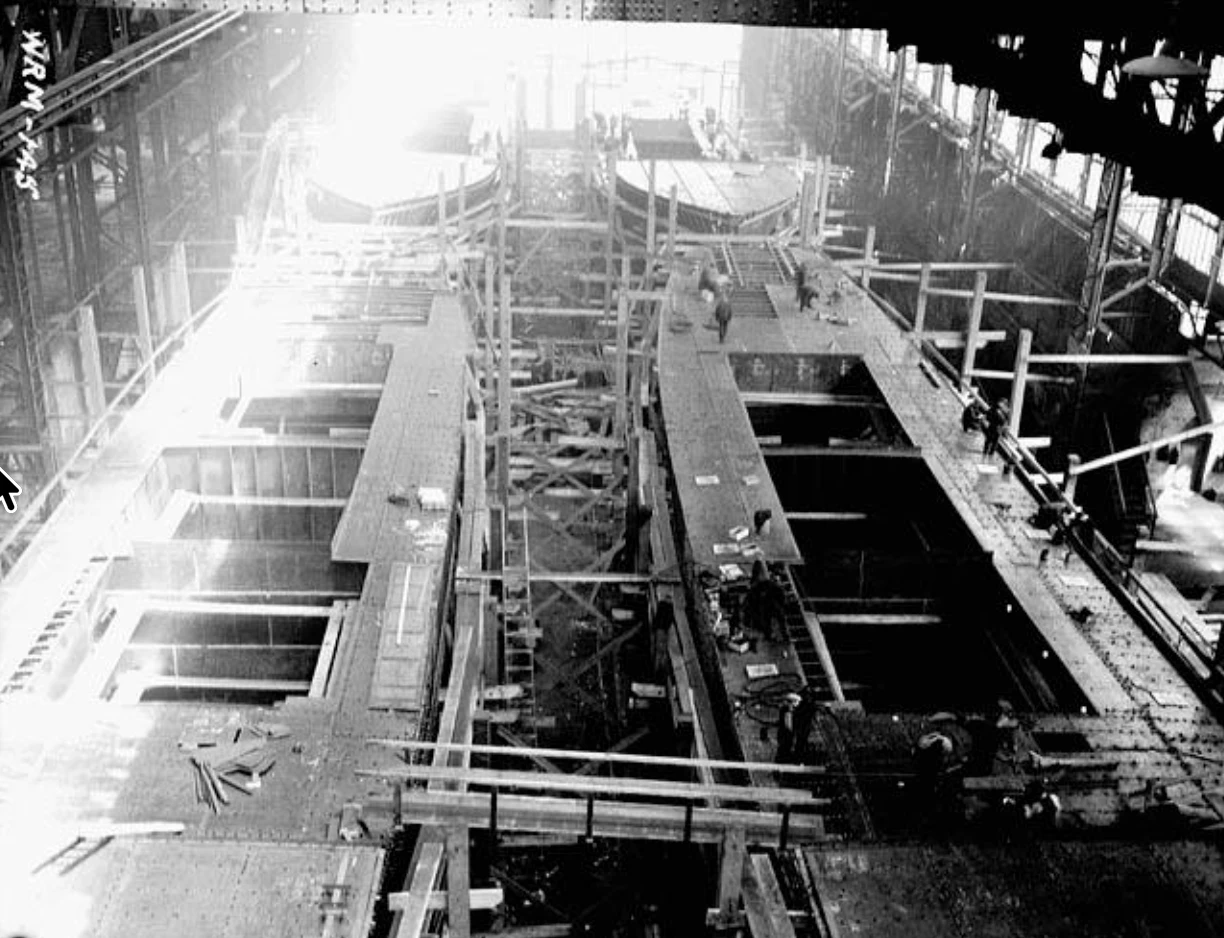
Canada's new engagement in the war meant a greater need for munitions, aircraft, and other heavy military equipment. Much of the manufacturing of these goods took place in B.C. — a single shipyard in North Vancouver produced nearly half of all cargo ships transporting raw goods and supplies to the front lines in Europe and Asia. The high demand for labour made the province a destination for those seeking industrial work. At one point, as many as 30,000 people — men and women — were employed in B.C.'s shipyards.

This new demand for workers transformed the workforce in ways similar to the Great War had. The European theatre had drawn the young men who would typically fill these positions overseas. Back home, there was now a void of manpower. Demand necessitated droves of women step up and take on work outside of the home, on top of their traditional domestic roles. From offices to shipyards to factories, women were now crucial participants in what had become one of the world's leading industrial powers.

But a growing sense of disquiet soon loomed over the newly-bustling economy. Japan was making moves across the Pacific. Between the attack on Pearl Harbor, Japan's occupation of two Alaskan islands, and the shelling of Vancouver Island's Estevan Point, the war was now uncomfortably close for British Columbians. The proximity led to a greater sense of duty in the province. By the war's end, more than 90,000 men and 26,000 women from B.C. had enlisted: the highest rate of enlistment per capita in Canada.

However, this heightened threat not only inspired patriotism, but something more insidious: an intense xenophobia directed towards Japanese Canadians had infected the province. Soon, this bigotry would be formalized in an oppressive wartime measure that would last for seven of British Columbia’s darkest years.
Feb 24, 1944

HMCS Waskesiu Sinks U-257

The River-class frigate HMCS Waskesiu (K330), the first frigate completed on the West Coast, sank U-257 in the Atlantic [20, 21]. This victory validated the capability of West Coast shipyards to build sophisticated anti-submarine vessels needed to counter advanced U-boats.
Image Source: For Posterity's Sake - A Royal Canadian Navy Historical Project

Placeholder
The first frigate completed on the west coast, WASKESIU was commissioned at Victoria on 16 Jun 1943, and left for Halifax on 08 Jul. She worked up in Bermuda the following month, returning to Halifax on 11 Sep 1943, and late in Oct 1943 left for Londonderry to join EG 5, re-numbered EG 6 on 21 Nov 1943. WASKESIU severed chiefly in U.K. waters, but early in 1944 supported Gibraltar and Sierra Leone convoys. On 24 Feb 1944, while escort to SC.153, she sank U 257, and in Apr 1944 made a trip to North Russia to bring back convoy RA.59. On 28 Apr 1944, WASKESIU , GROU K518, OUTREMONT K322 and CAPE BRETON K350 departed Kola Inlet with Convoy RA.59; arriving at Loch Ewe on 06 May 1944. She was present on D-Day. On 14 Sep 1944 she left 'Derry with ONF.253 for Canada, and soon after arriving began an extensive refit at Shelburne. On its completion in Mar 1945, she proceeded to Bermuda to work up, following which she sailed for Londonderry via Horta. She left 'Derry for Canada late in May 1945, proceeding to Esquimalt in Jun 1945 to commence tropicalization refit, but work suspended in Aug 1945 and she was paid off into reserve on 29 Jan 1946. She was sold to the Indian government in 1947 for conversion to a pilot vessel, and re-named Hooghly in 1950.

U-Boats Sunk: U-257 (Kptlt Heinz Rahe) sunk on 24 Feb 1944 by HMCS WASKESIU K330 in position 47-19 N, 26-00 W. Of her crew of 51, there were 19 survivors. U-257 was a VIIC type U-boat built by Vegesacker Werft, Vegesack, launched 19 Nov 41, commissioned 14 Jan 42, in service 25 months, with no record of sinking any ships, operated with the Wolfpacks in 1942 with the "Luchs" group (1-7 Oct) & attacked convoy HX 209, the "Falke" group (31 Dec-22 Jan 43). Some survivors were picked up by HMCS NENE.
June 6, 1944

D-Day / Operation Neptune

Canadian forces played an extensive role in the naval phase of the Normandy landings [23]. The Battle of the Atlantic battle honour was earned by vessels like the HMCS Alberni during this critical period [7].
Image Source: WIKIPEDIA The Free Encyclopedia

Placeholder
HMCS Alberni was a Flower-class corvette that served in the Royal Canadian Navy (RCN) during the Second World War. The Flower-class corvettes were warships designed for anti-submarine warfare. The ship was constructed by Yarrows Ltd. in Esquimalt, British Columbia, laid down on 19 April 1940, launched on 22 August and commissioned on 4 February 1941. The corvette sailed east to join the RCN's fleet in the Atlantic via the Panama Canal, where, upon arrival, the vessel began escorting trans-atlantic convoys in the Battle of the Atlantic. Alberni took part in the key convoy battle of Convoy SC 42. In 1942, the corvette was transferred to Allied convoy assignments associated with Operation Torch in the Mediterranean Sea. In 1944, Alberni was among the Canadian naval vessels assigned to Operation Neptune, the naval component of the invasion of Normandy and escorted support ships to and from the United Kingdom on D-day.

On 21 August 1944, while performing an anti-submarine patrol east of the D-day landing site, Alberni was torpedoed and sunk by the German submarine U-480. The ship sank quickly and 59 sailors were killed, with the remaining crew being rescued by Royal Navy motor torpedo boats. A maritime museum in Courtenay, British Columbia now honours the name of the ship and its dead.
Aug 21, 1944

HMCS Alberni Sunk

The HMCS Alberni (K103) was torpedoed and sunk by U-480 in the English Channel [7]. This loss occurred shortly after D-Day, highlighting the continuous threat faced by RCN vessels built across the country.
Image Source: CFB ESQUIMALT - Naval Military Museum

Placeholder
On 20 August, after a boiler cleaning, the ship left Southampton to relieve the corvette HMCS DRUMHELLER on patrol duty to the eastward of the swept channel where it divided in mid-channel for the British and American beach heads. At 0943Z on the 21st, she had covered about two-thirds of the distance to the patrol area. She was steaming at fourteen knots on a southerly course.

Four minutes later, about twenty-five miles southeast of St. Catherine’s Point on the Isle of Wight, ALBERNI was rocked by a shattering explosion. In less than ten seconds, she was awash from the funnel aft, listing to port and sinking fast by the stern. In another twenty seconds, she was gone. What had been confidently steaming on the surface moments before had completely vanished.Four minutes later, about twenty-five miles southeast of St. Catherine’s Point on the Isle of Wight, ALBERNI was rocked by a shattering explosion. In less than ten seconds, she was awash from the funnel aft, listing to port and sinking fast by the stern. In another twenty seconds, she was gone. What had been confidently steaming on the surface moments before had completely vanished.

At the moment of the explosion, all hands, with the exception of those on watch, had been in the messdecks. The inrush of water as the ship went down trapped them. Those who survived had no time to release carley floats. Many were without life belts and could stay afloat only by clinging to some bit of flotsam. For forty-five minutes, they struggled to keep afloat in fairly heavy sea. At the end of that time, just when many were ready to give up, the HM Motor Torpedo Boats Numbers 469 and 470 appeared. The welcome rescuers fished them out of the water and landed them at Portsmouth. None was severely hurt.

Four officers and 55 men went down with ALBERNI. Three officers, including the Commanding Officer, and 28 men survived. There has never been complete agreement as to whether the ship had been mined or torpedoed, but, post-war German publications state that she was sunk by U-480 (Oberleutnant Hans-Joachim Förster) with an acoustic torpedo. U-480 was sunk with all hands on 24 February 1945 by HMS Duckworth and HMS Rowley.
May 8, 1945

V-E Day and Conclusion

V-E Day marked the end of the Second World War in Europe and the conclusion of the Battle of the Atlantic [1, 2]. By 1945, the RCN had grown to nearly 400 fighting ships [10], many of which were built in Canadian yards.
Image Source: MONOVA - Museum & Archives of North Vancouver

Placeholder
Canada’s Naval Coming of Age: By V-E Day, the RCN had grown into a massive force of nearly 400 vessels. This indigenous fleet, built in Canadian yards, secured the seas and marked the successful conclusion of the longest battle of the war.

South Yard, Burrard Dry Dock Built on the south side of Burrard Inlet, Burrard Dry Dock’s south yard operated from 1941 to 1946. It concentrated on building hulls. Once launched, these were then sent to the north yard to be fitted out and finished. Like its sister yard, it had four berths. Visible in this photo are racks of steel plate ready for use and the rail tracks that brought in supplies. The steel supply was a major concern for Canadian shipbuilders. By March 1942, Wartime Merchant Shipping, the Crown corporation that organized the national production of merchant ships, needed 15,000 to 20,000 tons (13,605-18,140 t) of steel plate per month. (Each cargo ship required 10,000 pieces of steel.) Canadian manufacturers increased their output to avoid reliance on U.S. sources. The south yard closed down after the war, since there were insufficient contracts for Burrard Dry Dock to keep it going.

Sources Used

  • [1-4] Excerpts from "A Bridge of Ships: Canadian Shipbuilding during the Second World War"
  • [5-6] "North Vancouver's Wartime Shipbuilding" & "Yarrows Ltd. Shipyard History"
  • [7] "HMCS Alberni - Wikipedia" (Sinking details)
  • [13] "Chronology of the Second World War" (Veterans Affairs Canada - Black May)
  • [16-18] "The Unsinkable Arsenal" (Industrial data, SS Caribou)
  • [20-21] "HMCS WASKESIU" (U-257 Sinking)
  • [22] "The Battle of the Atlantic" (Turning points, Black Pit)
  • [24] "Battle of the Atlantic - Historical Sheet" (Mid-Atlantic Gap / Black Pit)